


Energy-Intensive Industry: Part of the Solution, Not the Problem
High energy prices, discussions about an industrial electricity price, rising grid fees, CO₂ pricing, new reporting obligations under the Corporate Sustainability Reporting Directive (CSRD), and instruments such as the Carbon Border Adjustment Mechanism (CBAM): energy-intensive industry is currently at the center of economic policy debate. In public discussions, a simplified picture quickly emerges: energy-intensive = harmful to the climate. However, it’s not that simple.
Industry is the foundation of our value creation. Without forging, steel, and forming operations, there would be no wind turbines, no grid infrastructure, no mechanical engineering, and no electric mobility. The question is therefore not whether energy-intensive industry has a future, but under what conditions it can shape that future.
Transformation requires investments in facilities, processes, digitalization, and people. Especially in economically challenging times, it is demanding to reconcile long-term climate goals with short-term competitiveness. For medium-sized industrial companies, stable framework conditions are crucial. These include reliable energy prices, predictable grid fees, the expansion of renewable infrastructure, and practical regulatory requirements. This is where industrial policy, energy policy, and climate policy intersect.
Wholesale Electricity Prices: Relief with Uncertainty
After the extreme price spikes of 2021 to 2023, wholesale electricity prices on the exchanges have calmed down considerably. However, they remain above the long-term average. At the same time, volatility remains high. In 2024, Germany recorded negative wholesale electricity prices for several hundred hours, meaning there were periods when the supply of renewable energy exceeded demand. This shows how dramatically the energy system is currently changing. This creates new opportunities for energy-intensive companies, but also new requirements for flexibility and load management. However, the exchange price only reflects part of the actual electricity costs. Grid fees, levies, and CO₂ costs remain unaffected. Relief in the wholesale market therefore does not reach companies completely or immediately. For operations with high electricity demand, energy thus remains a key competitive factor.
Market Mechanism and Political Discussion
The European electricity market is based on the so-called marginal pricing principle. This means that the most expensive generator needed to meet demand determines the market price for everyone. During the energy crisis, this system came under severe pressure, as high gas prices directly affected electricity prices. Since then, there has been intensive discussion at the European level about whether market design should be adjusted to cushion future price spikes and increase investment security. In parallel, industry associations are calling for reliable framework conditions, stable energy prices, and relief on grid fees. In other economic regions, energy prices are sometimes significantly lower or more heavily subsidized by the state. Transformation can only succeed if ecological objectives and economic viability are considered together.
Responsibility Within Our Own Sphere of Influence
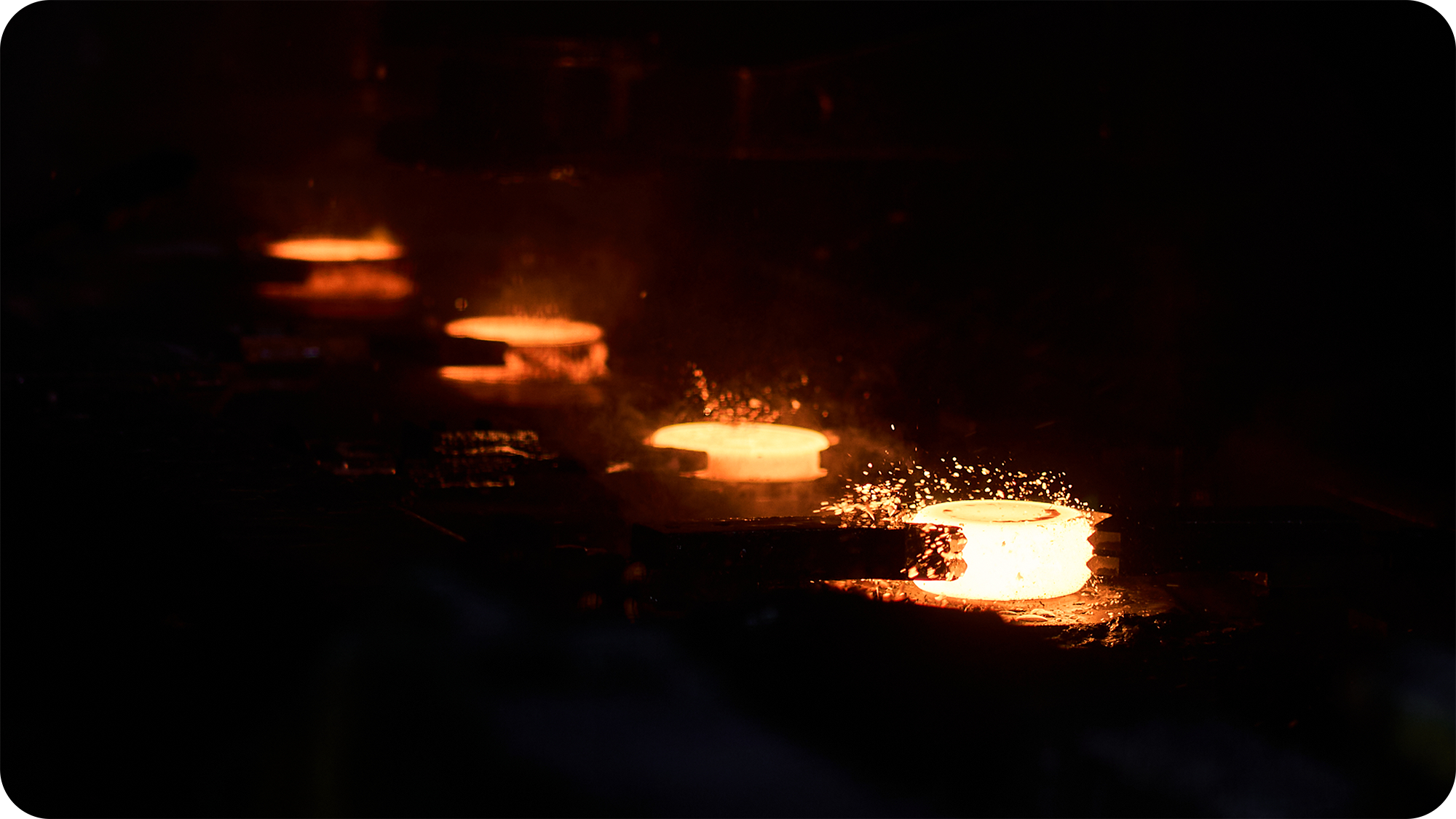
As an energy-intensive company, we bear responsibility and act accordingly. Since 2018, we have reduced our direct emissions in Scopes 1 and 2 by over 90%. This was made possible through targeted investments in energy efficiency, renewable energy, and new processes. A key component is the use of forging heat for heat treatment. Instead of allowing components to cool completely after forging and later reheating them with high energy input, they remain in specially developed insulation systems. This reduces natural gas consumption by up to 95%. Additionally, we source our electricity from renewable sources and secure long-term supply volumes through Power Purchase Agreements. Our climate goals are aligned with science-based standards. These measures do not result from symbolic motivation, but from technical conviction and economic reason.
As part of the EE-Industrie initiative, we are working together with other medium-sized companies on practical solutions for energy supply. Our goal is to integrate renewable energy into industrial processes, advance storage solutions, and remove regulatory barriers. The exchange within the network clearly shows: the transformation of industry can only succeed through collaboration.
The Greater Challenge: Value Chains
Here, material selection, transport routes, international supply chains, and the CO₂ intensity of raw materials used play a crucial role. Topics such as green steel or CO₂-reduced materials are therefore not only ecological but also industrial policy issues. Instruments such as CBAM are intended to ensure in the future that imported products meet comparable CO₂ standards. The goal is to avoid competitive distortions. Whether and how effectively these instruments work will become clear in practice. One thing is certain: decarbonization is not a task for a single company. It affects entire supply chains.
Realism Instead of Opinion-Making
Our goal remains to be climate-neutral by 2050. The path there consists of many individual, technically and economically balanced decisions. Energy-intensive industry will continue to require energy in the future. What matters is how efficiently, resource-conservingly, and innovation-driven it operates. Public debate must therefore not remain stuck in blanket attributions. Energy-intensive companies are not the problem. They are a key lever for industrial transformation. This requires realistic framework conditions, technological advancement, and collaborative cooperation along the entire value chain. We are working on this step by step.


